Trezor Guide: Secure Crypto Storage Explained Simply
Trezor: A Complete Guide to Secure Cryptocurrency Storage

Introduction
Managing cryptocurrency comes with a challenge that many new users underestimate: protecting digital assets from online threats.
Unlike traditional bank accounts, cryptocurrency ownership depends on private keys. If those keys are lost, stolen, or exposed, recovering funds can be extremely difficult or impossible. Many users store crypto on exchanges or software wallets because they are convenient, but these options can create security risks such as phishing attacks, malware, account breaches, and unauthorized access.
This is where hardware wallets become important.
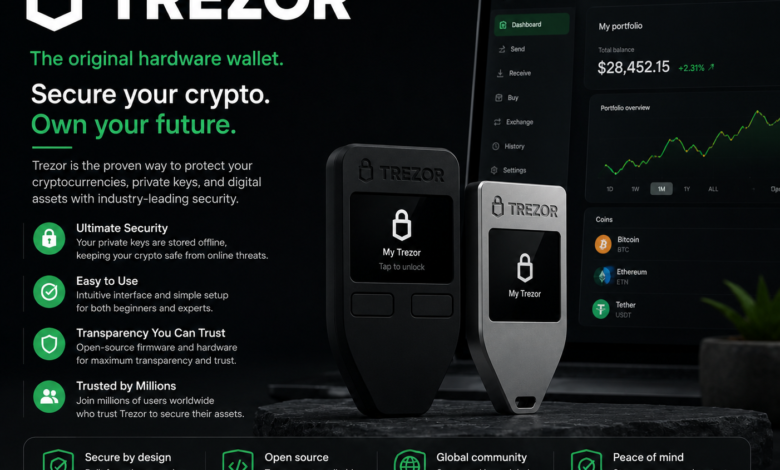
Trezor is one of the most recognized names in cryptocurrency hardware security. It provides physical devices designed to keep private keys offline while allowing users to manage digital assets securely.
For crypto investors, content creators, marketers, and small businesses entering the blockchain space, understanding how hardware wallets work is essential. This guide explains what Trezor is, how it protects cryptocurrency, its main features, advantages, limitations, common mistakes, and practical recommendations for safer digital asset management.
What Is Trezor?
Trezor is a hardware cryptocurrency wallet designed to provide offline storage and management of digital assets.
A hardware wallet is a physical device that stores a user’s private keys separately from internet-connected devices. The main idea behind this approach is simple: keeping sensitive information offline reduces exposure to online attacks.
Unlike an exchange account where a company controls access to funds, a personal hardware wallet allows users to maintain control of their own private keys.
Trezor was developed by SatoshiLabs, a company known for creating some of the earliest hardware wallets for cryptocurrency users.
The purpose of a device like Trezor is not to store cryptocurrency itself. Cryptocurrency exists on the blockchain. Instead, the wallet stores the private keys needed to authorize transactions.
Why Cryptocurrency Security Matters
The Difference Between Holding Crypto and Controlling Crypto
Many beginners assume that owning cryptocurrency means simply having an account on an exchange.
However, there is an important distinction:
“Not your keys, not your crypto” is a common phrase in the cryptocurrency community.
It refers to the fact that whoever controls the private keys has control over the assets.
When cryptocurrency is stored on an exchange:
- The exchange manages the private keys.
- Users access funds through account credentials.
- Security depends partly on the exchange’s systems.
When cryptocurrency is stored with a personal hardware wallet:
- The user controls the private keys.
- Transactions require physical device approval.
- Security responsibility shifts to the owner.
How Trezor Works
Private Key Protection
The core purpose of Trezor is protecting private keys.
When users create a wallet, the device generates private keys internally. These keys are not meant to leave the device.
When a transaction is requested:
The transaction details are sent to the wallet.
The user reviews the transaction information.
The device signs the transaction internally.
The approved transaction is sent to the blockchain.
The private key itself remains protected.
Offline Security Approach
A major advantage of hardware wallets is isolation from online environments.
A computer or smartphone connected to the internet can face risks such as:
- Malware
- Fake applications
- Browser attacks
- Phishing websites
A hardware wallet reduces these risks by keeping the most important security information offline.
However, users must still protect their recovery phrase and follow security practices.
Key Features of Trezor Hardware Wallets
Secure Transaction Approval
One important feature of Trezor devices is that transactions require confirmation on the physical device.
This creates an additional security layer because someone accessing a computer alone cannot easily approve transactions without access to the wallet.
Recovery Phrase Backup
During wallet setup, users receive a recovery phrase.
This phrase acts as a backup that can restore access to cryptocurrency if the physical device is lost or damaged.
The recovery phrase should be:
- Written down securely
- Stored offline
- Never shared online
Anyone who obtains the recovery phrase may potentially access the wallet.
Compatibility With Multiple Assets
Trezor devices support various cryptocurrencies and blockchain networks.
Supported assets can vary depending on the specific device model and software updates, so users should always check current compatibility before purchasing.
Open-Source Security Approach
One feature often discussed in relation to Trezor is its use of open-source software.
Open-source development allows researchers and developers to review parts of the code, which can improve transparency.
However, open source does not automatically guarantee perfect security. Good security also depends on:
- Proper device use
- Regular updates
- User awareness
Trezor Models and Product Differences
Trezor offers different hardware wallet models designed for different user needs.
Entry-Level Hardware Wallets
Basic models generally focus on essential cryptocurrency security features.
They are suitable for users who want:
- Offline private key storage
- Secure transaction approval
- Simple wallet management
Advanced Hardware Wallets
Higher-end models may include additional features such as:
- Larger displays
- Improved user experience
- Additional security options
Users should choose based on their requirements rather than simply selecting the most expensive option.
Benefits of Using Trezor
Strong Protection Against Online Threats
The biggest benefit of a hardware wallet is reducing exposure to internet-based attacks.
For example:
A small business accepting cryptocurrency payments may prefer keeping long-term crypto reserves in an offline wallet rather than leaving everything connected to an online account.
Greater Control Over Digital Assets
Trezor gives users direct control over cryptocurrency ownership.
This is especially valuable for:
- Long-term investors
- Businesses holding crypto assets
- Blockchain professionals
Better Security Habits
Using a hardware wallet encourages users to take security seriously.
It introduces important practices such as:
- Managing backups
- Protecting private information
- Reviewing transactions carefully
Limitations and Disadvantages of Trezor
Requires User Responsibility
A hardware wallet improves security, but it does not remove all risks.
Users are responsible for:
- Protecting recovery phrases
- Avoiding scams
- Keeping devices secure
If someone loses their recovery phrase, recovery options may be limited.
Less Convenient Than Software Wallets
Software wallets are usually faster for frequent transactions.
Hardware wallets require:
- Connecting the device
- Confirming transactions physically
- Managing backups
For daily small payments, some users may prefer more convenient options.
Initial Learning Curve
New cryptocurrency users may find hardware wallets confusing at first.
Important concepts include:
- Private keys
- Recovery phrases
- Transaction signing
- Network fees
Understanding these basics improves security.
Common Mistakes Trezor Users Should Avoid
Sharing the Recovery Phrase
The recovery phrase is the most important security element.
Users should never:
- Send it through email
- Store it in cloud documents
- Share it with customer support
- Enter it into unknown websites
Buying Hardware Wallets From Unverified Sellers
Users should purchase devices through official channels or trusted sources.
A compromised device could create serious security problems.
Ignoring Firmware Updates
Security improvements and bug fixes may require software updates.
Users should follow official update instructions carefully.
Falling for Fake Support Scams
Cryptocurrency users are often targeted by scammers pretending to provide wallet support.
Real support teams should not request private keys or recovery phrases.
Practical Tips for Businesses and Content Creators
Educate Before Promoting Crypto Products
Marketers and content creators discussing Trezor or cryptocurrency security should focus on education rather than exaggerated claims.
Good content explains:
- What hardware wallets do
- Who needs them
- Their limitations
- Safe usage practices
Explain Security in Simple Language
Many audiences find crypto security intimidating.
Effective educational content avoids unnecessary technical language and focuses on practical examples.
For example:
Instead of saying “private key cryptographic authorization,” explain that the wallet keeps the secret information needed to approve transactions protected from online access.
Consider the Audience
Different users have different needs.
A casual crypto user may need basic protection.
A business managing larger digital assets may require stronger security procedures.
Trezor Compared With Other Crypto Storage Methods
Exchange Storage
Advantages:
- Easy access
- Beginner-friendly
- Convenient trading
Limitations:
- Users depend on exchange security
- Accounts can be targeted
Software Wallets
Advantages:
- Convenient
- Usually free
- Good for frequent transactions
Limitations:
- Connected devices create security risks
Hardware Wallets
Advantages:
- Private keys stored offline
- Strong protection against many online threats
Limitations:
- Require careful management
- Less convenient for frequent spending
The Future of Cryptocurrency Security
As cryptocurrency adoption grows, security tools will become increasingly important.
Future developments may focus on:
- Easier wallet experiences
- Stronger authentication methods
- Better user education
- Improved protection against scams
The biggest challenge will not only be creating secure technology but helping users understand how to use it correctly.
Frequently Asked Questions About Trezor
What is Trezor used for?
Trezor is used to securely manage cryptocurrency private keys through a hardware wallet device. It helps users protect digital assets by keeping sensitive information offline.
Is Trezor safer than keeping crypto on an exchange?
A hardware wallet can provide stronger personal control over private keys, but security depends on proper use. Exchanges may offer convenience, while hardware wallets provide more direct ownership responsibility.
Can Trezor be hacked?
No system is completely risk-free. Hardware wallets reduce many online risks, but users must still protect their recovery phrase and avoid scams.
What happens if I lose my Trezor device?
If the recovery phrase has been safely stored, users can generally restore wallet access using a compatible wallet device.
Should beginners use Trezor?
Beginners can use Trezor, but they should first understand basic concepts like recovery phrases and transaction approval.
Does Trezor store cryptocurrency?
No. Cryptocurrency remains on the blockchain. Trezor stores the private keys needed to access and authorize transactions.
Is Trezor good for businesses?
Businesses holding cryptocurrency may consider hardware wallets as part of a broader security strategy, especially for long-term storage.
Conclusion
Cryptocurrency ownership requires more than buying digital assets. It requires understanding how to protect them.
Trezor represents one approach to improving crypto security by keeping private keys offline and giving users greater control over their digital assets. While hardware wallets are not a perfect solution and require responsible management, they provide valuable protection against many common online threats.
For investors, businesses, marketers, and content creators, the most important lesson is that cryptocurrency security depends on knowledge, preparation, and careful habits.
The best security tool is not only the technology itself but also the user’s ability to understand and apply it correctly.